



22 Ott Buying a House in Italy? Why Property Checks Before Buying Is Essential
An architectural guide for international buyers considering historic homes, countryside properties and renovation projects in Italy.
Buying a house in Italy can be an exciting opportunity, whether you are dreaming of restoring a traditional stone farmhouse, renovating an apartment in a medieval village or creating a permanent home in the Italian countryside. However, buying property in Italy involves more than agreeing on a price and signing a contract. Italian property transactions are governed by legal, cadastral, planning and building regulations. For international buyers, understanding how these rules affect an existing building is particularly important when purchasing an older property or planning renovations.
A property may be legally available for sale without necessarily being suitable for the renovations you have in mind.
At Dwell Stories, we believe that understanding a property’s architectural potential and regulatory limitations should be part of the decision-making process, not something discovered after purchasing it.
1. Can Foreigners Buy Property in Italy?
In general, foreign nationals can purchase real estate in Italy, although the conditions depend on their nationality and legal status. Citizens of European Union countries can generally purchase Italian property without special restrictions based on nationality. For non-EU citizens, eligibility may depend on their residence status, international agreements or the principle of reciprocity, which considers whether Italian citizens enjoy equivalent rights in the buyer’s country of nationality. These conditions must be assessed individually by the notary handling the transaction. It is also important to understand that owning a property in Italy does not automatically grant the right to live in the country permanently. Property ownership and immigration status are separate matters.
2. Understanding the Difference Between Cadastral and Planning Compliance
One of the most important aspects of buying an existing property in Italy is understanding the difference between cadastral compliance and urban planning and building compliance. These are two distinct matters, and both deserve attention before purchasing.
Cadastral compliance
The Italian Catasto is the national cadastral system used to identify and classify properties. A cadastral inspection may provide information about:
- the property’s registered identification and classification;
- its cadastral floor plan;
- its recorded cadastral characteristics;
- its registered cadastral income, which is relevant for taxation.
For existing urban property units, the cadastral information and floor plans must meet specific requirements in connection with the deed of sale. However, a cadastral plan is not proof that every part of a building was legally constructed.
Urban planning and building compliance
Planning and building compliance concerns whether the property corresponds to the construction and alteration works lawfully authorised over time. An architect or other qualified technician may need to examine historical building permits, approved drawings, subsequent authorisations and applicable planning regulations.
Potential discrepancies include:
- extensions built without the necessary authorisation;
- internal alterations not properly documented;
- attics or storage spaces converted into residential rooms without the required approvals;
- enclosed terraces or verandas;
- changes of use that were never formally authorised.
These issues may affect the possibility of renovating, financing, modifying or reselling the property.
A property appearing correctly on a cadastral plan does not necessarily mean it complies with planning and building regulations.
3. Why a Technical Inspection Should Come Before a Binding Commitment
International buyers often concentrate on location, appearance and asking price. Yet two houses with similar dimensions and purchase prices can have very different renovation prospects. Before making a binding commitment, it is advisable to commission appropriate technical checks, ideally before signing a purchase proposal or preliminary contract. Where this is not possible, suitable contractual protections should be discussed with the notary and legal advisers. A preliminary architectural assessment can help identify questions such as:
- does the building correspond to the available authorised documentation?
- are there structural concerns requiring specialist investigation?
- can the existing spaces be adapted to the buyer’s needs?
- are there restrictions on extensions or alterations
- what additional technical investigations are necessary?
- is the proposed renovation financially realistic?
This does not replace the notary’s legal checks. Instead, it complements them by examining the physical building and the feasibility of the intended project.
4. Buying a Historic House: What Restrictions Might Apply?
Italy’s historic towns and rural landscapes are among its greatest attractions for international property buyers. They are also environments where specific planning and conservation rules may apply. A property situated in a medieval village, a protected landscape or a historically significant building may be subject to restrictions affecting its transformation. Depending on the location and the type of protection, these may concern:
- alterations to external façades;
- replacement of windows and shutters;
- changes to roofing materials;
- extensions or new openings;
- demolition and reconstruction;
- external installations and modifications to the surrounding land.
Some works may require landscape authorisation or additional heritage approvals, beyond ordinary building procedures. The precise rules depend on the individual property, the applicable planning instruments and any relevant protection measures. A historic designation does not automatically prevent renovation. It does, however, make early investigation particularly important.
5. Can You Renovate a Ruin or Abandoned Farmhouse in Italy?
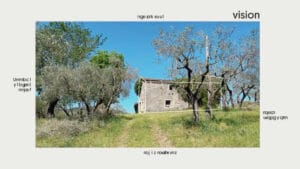
Abandoned stone buildings and traditional rural properties can be particularly appealing to foreign buyers. But purchasing a ruin does not necessarily mean that it can be reconstructed as a residential home. Before buying, several questions should be investigated.
Is the original building legally documented? The lawful existence, original volume and permitted use of the building may be essential when assessing possible interventions.
What is its authorised use? A former agricultural structure, storage building or outbuilding cannot automatically be converted into a dwelling.
What do local planning regulations permit Municipal planning rules, regional legislation and any landscape or heritage restrictions can significantly affect the possibilities for reconstruction or conversion.
Can the building be served by essential infrastructure? Access, water supply, wastewater disposal, electricity and other utilities may involve substantial additional costs.
For this reason, the architectural potential of a rural property should be assessed before assuming that a complete residential transformation will be possible.
6. How Much Does It Cost to Renovate a House in Italy?
Renovation costs are among the most frequently underestimated aspects of purchasing an older Italian property. The final budget depends on much more than the property’s floor area. Important factors include:
- structural condition and seismic considerations;
- roof and foundation works;
- electrical, plumbing and heating systems;
- energy efficiency improvements;
- accessibility and construction-site logistics;
- quality of materials and finishes;
- professional fees, permits and applicable taxes;
- unexpected conditions discovered during construction.
A house requiring only internal refurbishment is fundamentally different from a farmhouse needing structural consolidation, a new roof and complete replacement of its building systems. Historic buildings may also require specialist workmanship and materials compatible with their original construction. For this reason, generic renovation costs per square metre should be treated as preliminary indications rather than reliable quotations. A meaningful estimate requires an assessment of the existing building, a definition of the intended works and an understanding of the regulatory constraints.
The relevant question is not simply how much the house costs, but how much the entire acquisition and transformation project will cost.
7. What Building Permits Are Required for Renovations?
Italian renovation works are subject to different administrative procedures depending on their nature and complexity. The most common include:
CILA — Certified Notice of Commencement of Works
Generally associated with certain types of non-structural building maintenance, where the legal conditions for this procedure are met.
SCIA — Certified Notification of Commencement of Activity
Used for categories of works established by building legislation, including certain more substantial interventions.
Permesso di Costruire — Building Permit
Required for specific interventions involving new construction or major transformations as defined by law. Other procedures, notifications or authorisations may also be necessary. The correct procedure cannot be determined solely from the age or size of the building. It depends on the actual works proposed, the building’s legal status and the regulations applicable to the site. In protected areas, additional authorisations may be required. An architectural feasibility assessment should therefore precede the final design and construction schedule.
8. Understanding the Role of the Notary, Architect and Real Estate Agent
Several professionals may be involved in buying and renovating property in Italy, but their responsibilities are different.
The notary
The notary is a public official responsible for the legal formalities of the transaction, including relevant ownership and registry checks and the preparation or authentication of the deed.
The real estate agent
The agent facilitates the property transaction, connecting buyers and sellers and assisting with the commercial process.
The architect or qualified technical professional
The architect assesses the physical and architectural characteristics of the property, investigates technical and planning matters within the scope of the appointment, and evaluates possible renovation solutions. Where appointed, the architect may also prepare designs, handle relevant building procedures and provide professional services during construction. For an international buyer interested in renovation, involving a technical professional before purchasing can help connect the property search with the practical realities of transforming the building.
9. Buying in Southern Lazio: Opportunities and Considerations
Southern Lazio, including the provinces of Frosinone and Latina, offers a varied architectural landscape. The region includes medieval hilltop villages, traditional stone houses, rural farmhouses, agricultural estates and twentieth-century buildings. Areas such as Anagni, Veroli, Arpino, Fiuggi, the Comino Valley and the countryside around Cassino offer different settings and building traditions. For international buyers, the attraction often lies in the possibility of finding an authentic home outside Italy’s most heavily marketed property destinations. However, the diversity of the territory also means that planning regulations, access conditions, landscape protections and renovation requirements can differ considerably between neighbouring municipalities and even between individual properties. A stone house within a historic centre may require a different approach from a rural farmhouse surrounded by agricultural land. Understanding these differences is essential when evaluating both the purchase and the renovation project.
10. A Practical Checklist Before Buying Property in Italy
Before committing to an Italian property, international buyers should consider the following steps:
Confirm eligibility to purchase, particularly where non-EU nationality or residence status requires additional checks.
Appoint an independent notary and obtain appropriate legal and tax advice.
Review ownership and cadastral documentation, including the available floor plans.
Commission technical due diligence to assess building and planning compliance.
Investigate landscape, heritage and local planning restrictions.
Assess structural conditions and identify any need for specialist surveys.
Verify the feasibility of the intended renovation, including possible changes of use.
Prepare a preliminary renovation budget, allowing for professional fees, taxes and contingencies.
Check access, utilities and infrastructure, especially for rural properties.
Review contractual commitments carefully before signing an offer or preliminary agreement.
These checks are especially important for older buildings, properties requiring extensive renovation and homes purchased remotely.
11. Why Independent Architectural Advice Matters
Buying a property and renovating it are often treated as two separate decisions. In practice, they are closely connected. The characteristics that make a building attractive — its age, original materials, unusual layout or rural location — may also influence the complexity and cost of adapting it to modern living. An independent architectural assessment can help buyers understand the relationship between the property’s existing condition, its legal and planning framework, its potential for transformation and the investment required. This is particularly valuable for international clients who cannot easily visit properties, communicate with local offices or coordinate multiple professionals from abroad.
Find and Renovate Your Home in Italy with Dwell Stories
At Dwell Stories, we combine architectural expertise with independent property advice to assist international clients interested in finding, evaluating and renovating homes in Southern Lazio. We work on behalf of buyers and homeowners, not property sellers. Our approach begins with understanding the property and its potential, helping clients make informed decisions before embarking on a renovation project. Whether you are considering a stone farmhouse in the countryside or a historic house in an Italian village, we can help you explore the architectural possibilities and technical considerations involved.
Disclaimer: this article provides general information about buying and renovating property in Italy. It does not constitute legal, tax or property-specific technical advice. Requirements vary according to the property, the buyer’s circumstances and applicable legislation. Independent professional checks should always be carried out before making binding commitments.
LEARN MORE ABOUT OUR APPROACH OR GET IN TOUCH TO DISCUSS YOUR PROJECT.

The Anatomy of Renovation Costs: What Does It Really Cost to Restore a Country House in Southern Lazio?
Read More »THINKING OF BUYING OR RENOVATING A HOME IN ITALY?
Get practical insights on property checks, renovation costs, local regulations and life in Southern Lazio — delivered to your inbox.
No spam. Just useful advice and inspiration. Unsubscribe anytime.